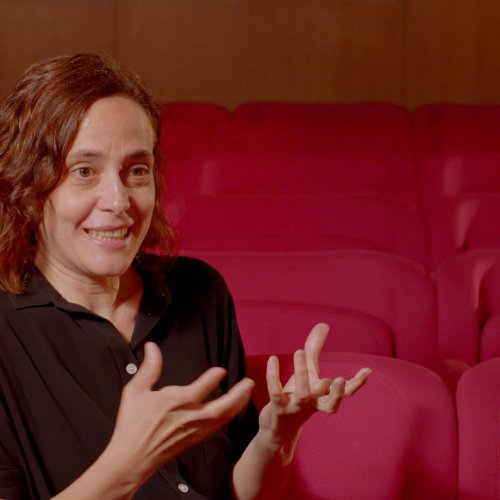
Personal circumstances and quality of life are often kept within private conversations among filmmakers, and only rarely enter public discussion or connect to questions of creativity and production. This itinerary proposes a broader, more inclusive perspective, aiming to offer a human view of documentary filmmaking. It looks at areas such as the lived experiences of filmmakers, learning and their wellbeing in terms of health, care, work-life balance, and financial stability. This video also considers how a filmmaker’s location can influence their opportunities, as well as the development of communities and professional networks.
Learning documentary practice undoubtedly shapes the profession’s future development. Although specialised schools and study programmes in documentary film have emerged around the world in the last two decades of the twenty-first century, many documentary filmmakers have received training in other fields or have taught themselves through personal experience. The development of real-life cinema has traditionally been linked to other disciplines such as anthropology, politics, philosophy, and history, as well as to other artistic branches such as literature, theatre, architecture, and digital arts.
In this chapter, filmmakers Alejandro Alonso, Laia Manresa and others reflect on their educational paths from formal film schools to learning through experience and practice. They discuss how other disciplines influence their work and what continues to shape their understanding of documentary filmmaking over time.
Learning documentary practice undoubtedly shapes the profession’s future development. Although specialised schools and study programmes in documentary film have emerged around the world in the last two decades of the twenty-first century, many documentary filmmakers have received training in other fields or have taught themselves through personal experience. The development of real-life cinema has traditionally been linked to other disciplines such as anthropology, politics, philosophy, and history, as well as to other artistic branches such as literature, theatre, architecture, and digital arts.
In this chapter, filmmakers Alejandro Alonso, Laia Manresa and others reflect on their educational paths from formal film schools to learning through experience and practice. They discuss how other disciplines influence their work and what continues to shape their understanding of documentary filmmaking over time.
The geographical territory from which the filmmaker operates is another fundamental axis that determines the practice of documentary film. The imbalance between the peripheries and the epicentres, which have powerful audiovisual ecosystems and consolidated cultural policies, condition the size of the productions and the possibilities of disseminating the films. At the same time, the place of residence and creation determines the options for building communities and networks that allow the filmmaker a collective and shared reflection in relation to his cinematographic practice.”
In this video, producer Natasha Craveiro, director Anaïs Taracena and others explore how geography shapes documentary filmmaking from working in peripheral territories versus production centers to how location impacts financing, distribution and creative freedom.
Usamos cookies técnicas y funcionales necesarias para el correcto funcionamiento del sitio. Estas cookies no requieren tu consentimiento. Puedes consultar más información en nuestra Política de cookies.